• Training Contentt • Substance Use & Emerging Drug Use • Matters • Program Staff • Calendar • Resources
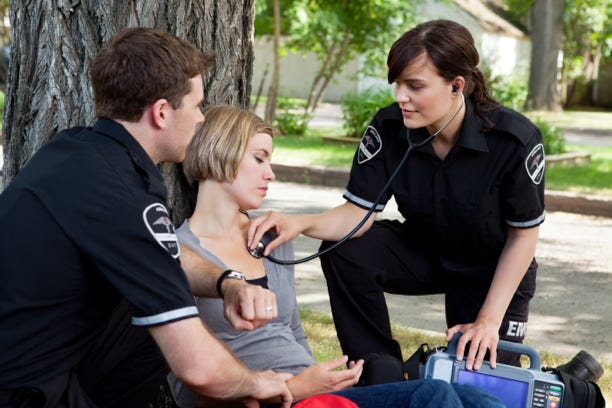
“This was one of the most influential classes I have taken. 23 years as a Firefighter/EMT, and I finally had a class to help empathize better with the people we are called to help. Thank you.”
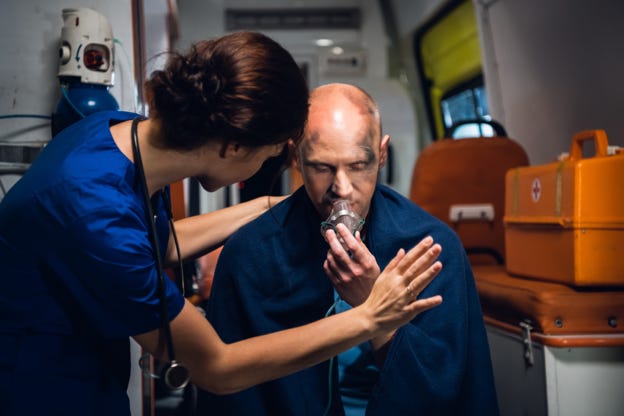
“The role play segment of the training was great, because it allowed us to practice
what we learned.”
“I have a better understanding on how to initiate conversation with someone in a
vulnerable position.”
Training Content
The Five Minutes to Help training emphasizes that first responders have a unique opportunity to not only save lives, but also to plant seeds of change and hope. By approaching patients without stigma or judgement, applying harm reduction principles, understanding readiness through the Stages of Change, and using motivational interviewing, responders can maximize the impact of even the briefest encounter. Through practice, reflection, and attention to their own self-care, first responders can sustain their ability to serve with empathy and effectiveness—helping to turn crisis moments into turning points toward recovery.
There are two components to the Five Minutes to Help program, described below.
5 Minutes to Help: An Intro to Substance Use Disorder, Treatment and Resources for EMS
This is a one-hour, self-paced, online training, which introduces the concepts taught in the longer four-hour training.
After completing this one-hour, online training, EMS clinicians will be able to:
• Identify the three 'Domains of Dysfunction'
• Describe treatment options for those with Substance Use
Disorder (SUD)
• Incorporate harm reduction practices during patient interactions
• ConsiderStages of Behavior Change during patient interactions
• Apply basic Motivational Interviewing communication
strategies during patient interactions
• This class has been approved for 1 Elective CEU for
EMS providers and can be accessed here.
We encourage first responders to complete this introductory training before completing the more in-depth four-hour course, described below.
Five Minutes to Help
This four-hour course is delivered live, both in-person and virtually via Zoom. The course includes lecture, interactive activities, and opportunities for skill building through scenario-based role plays. Class size is limited to 30 participants and is facilitated by two or three trained instructors.
After participating in the training, participants will be able to:
• Describe the stigma and stereotypes associated with substance use
• Identify several approaches for addiction treatment
and harm reduction
• Explain the stages of behavior change
• Demonstrate basic motivational interviewing techniques as
a communication tool
Here is an overview of the topic areas addressed in this training:
• Stigma
o Stigma around substance use can prevent individuals from
seeking help, accepting resources, or even acknowledging their
struggles. Overdose patients may feel judged, blamed, or
devalued, which can close off opportunities for meaningful
engagement. First responders who recognize and reduce stigma
through respectful, nonjudgmental communication can foster
trust and create space for recovery conversations.
• Compassion Fatigue
o The opioid epidemic has placed enormous strain on first
responders, many of whom revive the same individuals repeatedly.
This can take a significant toll on their mental and emotional
well-being. Without intentional self-care, these pressures may
lead to compassion fatigue, reducing both effectiveness in the
field and personal resilience.
o This training acknowledges that challenge and provides strategies
to reduce frustration, build resilience, and approach patients
with empathy even in the most difficult circumstances.
• Harm Reduction
o Harm reduction is a public health approach that meets people
“where they are” by focusing on reducing the negative
consequences of drug use, rather than insisting on immediate
abstinence. In overdose response, this can include providing
information about safer use, connecting individuals with naloxone
access, or linking them to syringe service programs. By framing
care through harm reduction, responders can keep people alive
long enough to consider and pursue treatment.
• Stages of Behavior Change
o The Stages of Change model reminds us that recovery, like any
change in behavior, is most often a process, not a single decision.
After an overdose, a person may be in complete denial of their
addiction, considering change in activities, or ready to act.
o First responders who understand this well-recognized framework
can tailor their communication—planting seeds of motivation for
someone not yet ready or offering clear next steps for those who
are. Even small conversations can help move a patient toward
the next stage of readiness.
• Motivational Interviewing
o Motivational Interviewing (MI) is a conversational approach that
helps people explore their own reasons for change, rather than
being told what to do. In the context of an overdose, MI
techniques —such as asking open-ended questions, listening with
empathy, and reflecting back what the patient says—can reduce
resistance and spark self-motivation. For first responders, even a brief
use of MI can turn a post-reversal encounter into a moment of
hope and possibility.
o Recognizing that patients have the right to choose their own
direction in life and are the best source of ideas for how to change
will help responders avoid trying to solve problems outside of
their control.
• Skill building and role plays
o Scenario-based role plays give first responders a safe space to
practice the difficult conversations that can follow an overdose
reversal. These exercises allow participants to test communication
strategies, build confidence, and experience how different
approaches might feel to a patient. By practicing in a realistic but
supportive setting, responders can refine their skills, reduce
hesitation in the field, and be better prepared to turn a brief
interaction into a meaningful connection.